Music lessons, soccer practice, homework, school projects, club meetings. The school year is filled with a myriad of wonderful activities! But for many students, the calendar can feel like a constant balancing act. How do you make space for consistent musical study with so many demands competing for time and attention?
Balance is the answer! And learning to balance academics and musical study is about far more than just finding room in a crowded schedule: it teaches students to manage priorities, seek community support, and make intentional choices about what matters most.
Here are a few tips from the Merit community—faculty, staff, and alums—about strategies for finding that balance in a world that’s constantly competing for attention.
1. Schedule Practice Time
Balancing multiple commitments requires intentionality. Students need help organizing their schedules and creating routines; this is where teachers and parents come in.
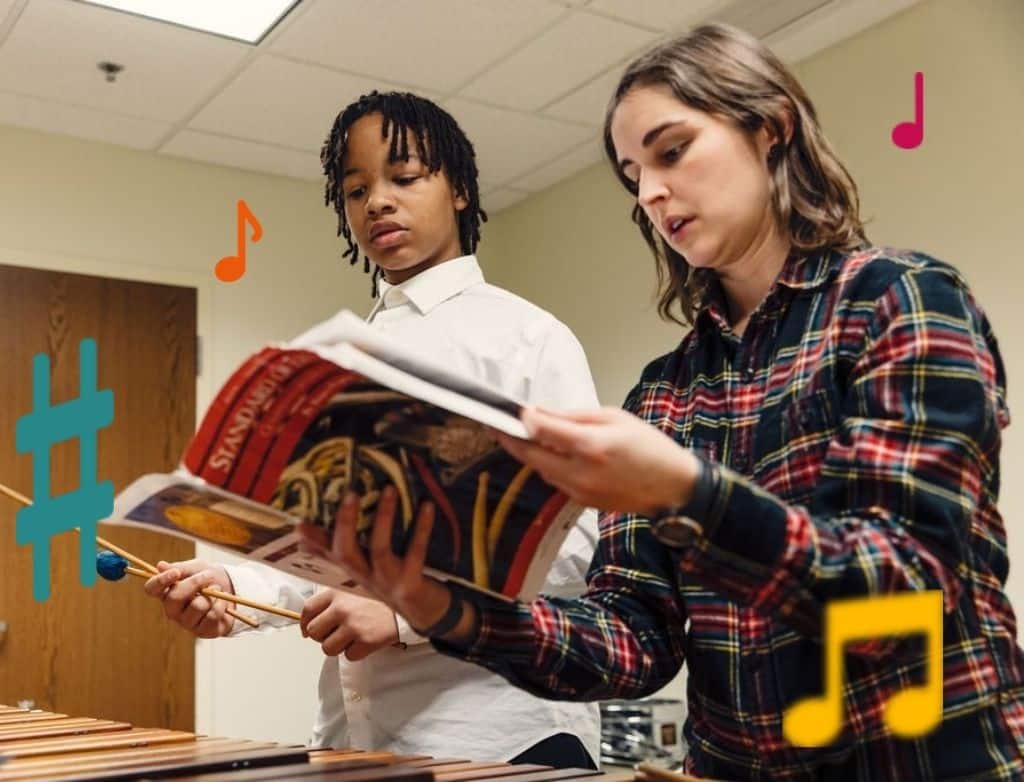
Violin teacher and the Strings department co-chair Iris Wei sits down with students and parents to identify where practice can realistically fit between school, sports, and other activities. “Go through your calendar and look for those pockets of time when you can practice. Book it ahead of time!”
This kind of planning teaches skills that are essential in college and professional life, as 2024 Merit and CMPI alum Sofia Villanueva attests. She uses this same method as she pursues her degree in Flute Performance at University of Illinois at Urbana-Champaign. “The best strategy I use is a planner!” she says. “It helps me keep myself organized.”
2. Focus on Consistency Over Duration
Long hours do not automatically equal productive practice sessions. Rather than waiting for an extended block of free time to commit to a marathon practice session, focus on completing short daily sessions.
Sarah Vander Ploeg, Assistant Director of Administration for the Chicago Musical Pathways Initiative, encourages younger students to strive for consistency before worrying about long practice hours. “If you can start by finding a consistent 30 minutes a day—and that doesn’t have to be consecutive—that’s a great place to start.”
Wei encourages incorporating music learning beyond time spent playing. “There’s a lot of practicing that happens without the instrument,” Wei says. “Let’s say you’re commuting. You can listen to a recording while you follow along and study the score.” This mental preparation is just as important as the time spent playing the notes. “It’s important to understand the music and have a plan than to dive right into the playing part of practicing.”
3. Embrace Music as a Release, Rather Than an Obligation
Studying music is more than another item on a to-do list; it is a creative outlet and can be a stress reliever, too. Vander Ploeg notes that music contributes to a student’s overall well-being when approached thoughtfully. She reflects on a CMPI fellow who starts every morning with his practice: “It sets his mind for the day. It sets his intention for the day. It reminds him who he is and what he loves.”
Wei encourages students to think about practice as a chance to renew energy. Rather than viewing it as another obligation, she suggests using music as a break from homework. “You’re not going to be able to sit there and do math for two hours without stopping,” she says. Taking time to practice can provide a mental reset before returning to schoolwork.
3. Embrace Music as a Release, Rather Than an Obligation
Studying music is more than another item on a to-do list; it is a creative outlet and can be a stress reliever, too. Vander Ploeg notes that music contributes to a student’s overall well-being when approached thoughtfully. She reflects on a CMPI fellow who starts every morning with his practice: “It sets his mind for the day. It sets his intention for the day. It reminds him who he is and what he loves.”
Wei encourages students to think about practice as a chance to renew energy. Rather than viewing it as another obligation, she suggests using music as a break from homework. “You’re not going to be able to sit there and do math for two hours without stopping,” she says. Taking time to practice can provide a mental reset before returning to schoolwork.
4. Set Clear Goals
When time is limited, focus is essential. Vander Ploeg encourages students to think in terms of short-term, medium-term, and long-term goals. What needs improvement this week? What performance is coming up next month? What larger musical goals are guiding today’s work? The same principle applies to academics. One of the characteristics she sees in students who manage multiple commitments successfully is “having a clear sense of priorities.”
Students who understand their goals are better equipped to balance their schedules and make decisions about where to focus their energy.
5. Avoid Burnout by Prioritizing
Once students have learned to identify what matters most to them, then they need to learn to focus their energy accordingly. “Burnout is real, and you have to learn to get comfortable with saying no,” shares Vander Ploeg.
She encourages students to regularly check in with themselves about goals, values, and priorities. Having a personal “North Star” makes it easier to navigate opportunities and demands competing for attention.
6. Lean On Your Community
Most importantly, students don’t have to navigate these challenges alone! “It might seem scary to share that you’re overwhelmed, but I promise you, there are people in your life who would love to be a listening ear,” Vander Ploeg says. “We want our students to thrive and be healthy.”
That support can come from many places: parents helping build routines, teachers offering guidance, and ensemble members working toward shared goals.
Music creates opportunities for meaningful human connection. “In a world that is increasingly digital, there is something really special and valuable about being in an ensemble or working with a music teacher and having that type of connection,” Vander Ploeg says. Beyond developing musical skills, students build relationships, learn teamwork, and become part of a community that can support them through challenges both in and out of the rehearsal room.
There is no single formula for balancing school and music; every student’s schedule, goals, and interests are different. What remains constant is the value of the skills students develop along the way. Through consistent practice, thoughtful goal-setting, community support, and learning how to prioritize their time, young musicians gain tools that extend far beyond music itself. They learn resilience, self-awareness, and how to balance competing responsibilities.
Those lessons don’t end with the school year; they are the foundation for success in college, careers, and life.